(This work in progress was submitted by the
author and has not been changed by the editor.)
This Work in Progress was submitted in the
hope that those who read it may have additional
information to add. If so, please contact
me, Kel Preston - Email: kjp400@hotmail.com
I am researching my gg grandfather, Andrew Brown, who married Margaret Kilgour. The Brown's lived in the Towamba region
and Eden areas. I am also researching Alexander Kilgour and Margaret Taylor who lived at Twofold bay during the early
1860's.
I am putting together a booklet in PDF format
and any information would be of great value,
Andrew Brown was from Philadelphia, USA and
Margaret Kilgour was from Scotland.

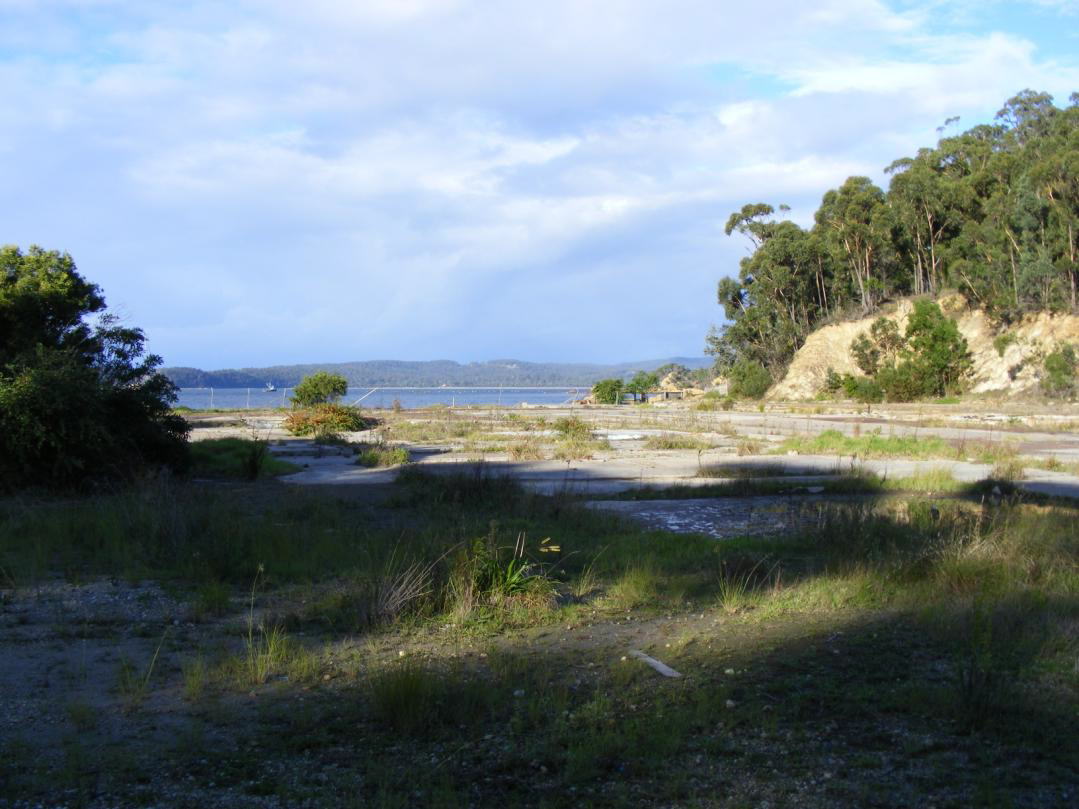
Alexander Kilgour was baptised on the 30th March 1788, at Dundee, Angus Scotland. His parents were George Kilgour and Christian Cameron. Alexander first married a Margaret Butters (see family details) his second wife was a Margaret Taylor; they were married on the 11th February 1822, at Dundee, Scotland. Alexander died on the 30th June 1862 from Chronic Bronchitis which he had been suffering for 2 months at Eden; he was buried on the 2nd July at the Eden Cemetery New South Wales. Margaret Taylor was baptised on the 22nd April 1804, at Dundee Scotland. Margaret was the daughter of James Taylor and Janet Sword. She died on the 4th January 1869 of breast cancer, which she had been suffering with for 2 years. She was buried in the Eden Cemetery New South Wales Their known children are: Alexander, James, Ann, David Taylor, Margaret, William, Helen (Ellen) MaConochie, Alexander, Robert & George. The Kilgour family are believed to have lived at Cattlebay Twofold bay, this was later the site of Heinz Greenseas Cannery until 1999 the majority of the cannery buildings were demolished circa 2003.
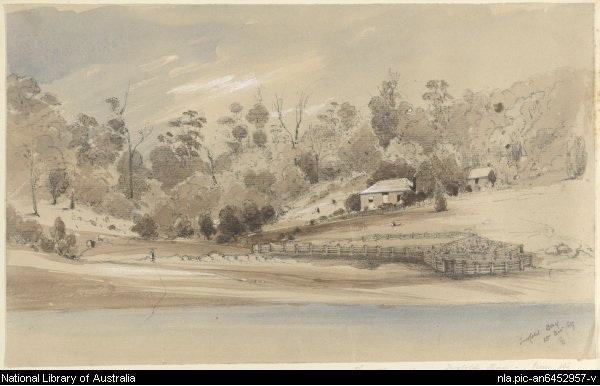
The above drawing: The Cattle yard, Twofold Bay, from the deck of the Tasmania en route to Hobarton 1869 (source: http://nla.gov.au/nla.pic-an6452957)
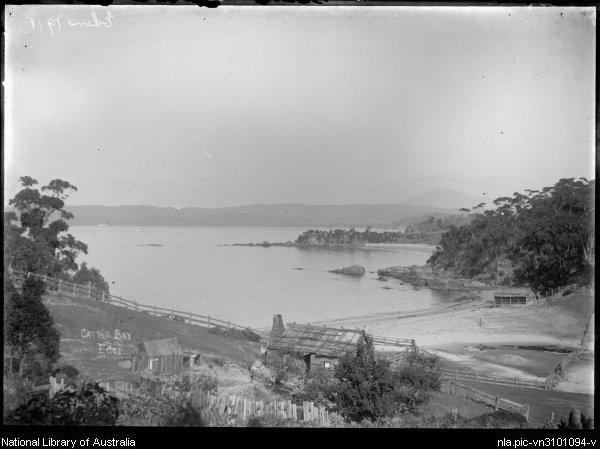
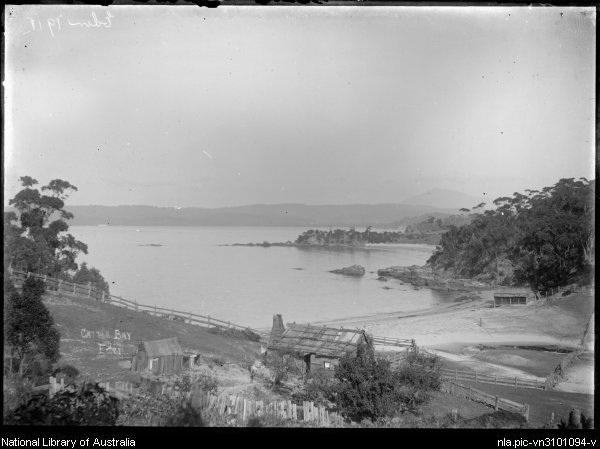
The above photo is a view of Cattle Bay, Eden; with mount Imlay in the background, the photo is circa 1900. The Kilgour family are believed to have lived where this house and land are; whether this is the original house of the Kilgour¡¦s is not known, (Source: http://www.nla.gov.au/apps/cdview?pi=nla.pic-vn3101094&referercode=cat)
Scotland 1811 Alexander Kilgour was first married to a Margaret Butters. They were married on the 23rd December 1811, at Dundee Scotland. Margaret Butters was baptised on the 6th July 1791, at Dundee. She was the daughter of Alexander Butters and Grizel Brown 1814 A reference from the Freemason's - In the East where peace reigns, the Light Shineth in Darkness, and the Darkness Comprehendeth it not. TO ALL WHOM IT MAY CONCERN - We the Master, Wardens, and Secretary of the Ancient Lodge Dundee No. 55 held under the regulation of the Grand Lodge of Scotland. Do hereby certify that the bearer Brother Alexander Kilgower is a regular registered Master Mason in our Lodge. During his residence among us he has conducted himself in so far as we know as becomes a worthy Brother. We therefore recommend him to all regular Lodges and to the brotherly love and affection of all the Faithful world of Light hoping that he always will act so as to merit their esteem. Given under our Hands and Seal this Twenty Eighth Day of January in the Year of our Lord one thousand eight hundred and fourteen and Light 5814. James Hatton M, Robot Leslie S. W., James Reid J. W., A. L. Urquhart Secty. (Written 28th January 1814, Dundee Scotland for Alexander Kilgour) 1819 Margaret Kilgour (nee Butters) dies on the 1st September 1819, and was buried at the Howff Old Cemetery, Scotland. 1822 Alexander's second marriage to Margaret Taylor 1840 The Kilgour's leave Scotland on the 18th September on the ship Slain's Castle New Zealand 1841 The Kilgour¡¦s arrive in Port Nicholson on the 25th January, William Kilgour (2yrs old) dies during the voyage. Hobart Tasmania 1841 February 19th - Alexander & Margaret Kilgour with their five children (Alexander jnr, James, Ann, David, Margaret) arrive at Hobart from Port Nicholson New Zealand on the Lord Sidmouth. Listed as 'Kilgrove', wife and 5 children in the colonial times (23rd February 1841 pg 2) The passengers arrived by the Lord Sidmouth - who are about sixty in number, amongst other unfavourable reports slate, that, in consequence of the frequency of earthquakes, of which several shocks had been experienced by the settlers since their arrival, they dare not build stone buildings of any size. We were not before aware that the Colony was v sited by such n calamity, and we trust the report will turn out to be unfounded. We give it, however, as we received ii; anti shall be most happy to have it in our power to contradict the assertion. (The Sydney Gazette and New South Wales Advertiser Thursday 18 March 1841, pg 3) Moruya New South Wales 1842 Helen Maconochie Kilgour (known as Ellen Kilgour, she was the 7th child) believed to have been born at Moruya NSW 1843 (extract from The Sydney Morning Herald, 21st June pg 3) For Hobart Town, the brig Sir John Byng, Captain Keene, with sundries. Passengers: Mr and Mrs Kilgour, Mr Daniel Kilgour, Miss Margaret and Ellen Kilgour. (Daniel would be David Kilgour) June 20 - The Sir John Byng, Keene master for Hobart Town with Sundries. Passengers Mr and Mrs Kilgour, Mr. D. Kilgour, Miss Margaret and Miss Ellen Kilgour. (extract from The Australian 21st June 1843) Work in progress as of April 2011 DEPARTURES JUN 21.-For Hobart Town, the brig Sir John Byng, Capt Keen, with sundries. Passengers- Miss Robson, Mr. Robert Crawford, Mr. Alfred Holland, Mr. and Mrs. Kilgour, Mr. Daniel Kilgour, Miss Margaret and Miss Ellen Kilgour, Mrs. Langley and child, Mr. Dorgan, thirty-three prisoners of the crown and a guard of twelve soldiers (Australian Chronicle Sydney Thursday 22nd June 1843 pg 3) DEPARTURES - For Hobart Town, yesterday, the brig Sir Joint Byng, Captain Keene, with cedar, &c. Passengers-Miss Robson, Mr. Robert Crawford, Mr. Alfred Holland, Mr. and Mrs. Kilgour, Mr. D. Kilgour, Miss Margaret and Miss Ellen Kilgour, Mrs. Langley and child, Mr. Dargan, thirty-three prisoners of the Crown, and a guard of twelve soldiers. (The Sydney Morning Herald, Thursday 22 June 1843, pg 2) 1844 Alexander Kilgour (8th child) born in Hobart and dies there, (Alexander Kilgour junior must have died between 1841 and 1844 for Margaret to name her new son after him), Alexander junior was a cooper like his father. 1846 Robert Kilgour (9th child) born in Hobart and dies there 1848 George Kilgour (10th child) born ? Williamstown Victoria 1852 David and Ann Kilgour are witnesses to Eliza Jane Brown marriage to John Jones at Williamstown 1853 Ann Kilgour dies of Tuberculosis at Williamstown in August Twofold Bay, New South Wales 1857 David Kilgour signs a petition to keep the local magistrate at Eden 1859 Petition - David Kilgour signs a petition at Eden addressed P. J. Murray Esq (Police Magistrate) with Andrew Brown another inhabitants of Eden to petition the magistrate in staying in Eden. (The Morning Herald, 16th September 1859, pg6) 1860 David and Ellen Kilgour are witnesses to their sister Margaret marrying Andrew Brown at Eden 1861 Shipping arrivals October 18 - 17th instant, passengers - Mrs Kilgour, Mr. Falkner, and 1 in the steerage. Captain agent (The Sydney Morning Herald, Saturday 19th October 1861 pg4) 1862 Alexander Kilgour dies at Eden, surviving children mention on death certificate are: David, George, Margaret and Ellen. 6 males listed dead and 2 females 1863 (Extract) List of things found at Sea and saved from the wreck of the City of Sydney. 1 quarter-cask brandy, X 972 over 249, 1 sponge, 1 trunk blue-top rope handles; 1 hogshead ale, H over 113, X 699. Found by Kilgour and Weigold; (The Sydney Morning Herald, Wednesday 7th January 1863 pg1) 1864 From the Police Gazette NSW 1864 - Stolen sometime during the night of the 18th instant, at Eden, the property of Margaret Kilgour : A sailing dingy, 15 feet long, clinker built, sharp on keel, straight up stem and stern, stepped for mast, has seat spring, and has been repaired on starboard side, painted white inside and black outside ; also, two paddles. Supposed to have been taken on board a collier barque or brig, bound from Newcastle to Melbourne. 1867 George and David Kilgour are lost at sea, presumed to have drowned. The article also mentions that two other Kilgour brothers had predeceased them in a similar accident in the same area. The two other brothers would have been James and Alexander. Twofold Bay (from our correspondent) - December 27th - An accident of a very distressing character, and which is supposed to have occurred about the 11th or 12th instant, has cast a feeling of sorrow upon this community. For some time past David and George Kilgour, accompanied by one Minors (formerly second or third officer on the famous Shenandoah). William Shaw, and an American known as 'Jonathan' commenced a fishing and curing speculation at Montague Island, situated about fifty miles from this bay. This crew of five, in a whaleboat left for Montague Island with provisions for about a fortnight's stay there, and not having been heard of for four or five weeks, anxious inquires were instituted, which resulted in discovering that a gardener named Day residing near the North head. Had a day or two after the occurrence of the late hailstorm, which took place on the 12th instant, found the thwart of a boat with the name 'Ellen' (the name of 'Kilgour's boat') scratched upon it, near Astling's beach. This evening a boat's crew (accompanied by Mr. Creagh, sub inspector of police, who is here upon official business) went to Leonard's Island, about seven miles hence and picked up the gunwale and other parts of a whaleboat, which in every respect corresponds with the paint and general description of the boat belonging to Kilgour's party - in fact, the thwart and gunwale are positively identified by two or three of the whalers here, who were well acquainted with the boat. It seems certain therefore, that the entire crew have been drowned. A strange coincidence is that two other sons of poor Mrs Kilgour were drowned near the place where the present sad event is supposed to have occurred. Minors had on him at the time he left Eden a valuable gold watch, which had been presented to him by the officers of the Shenandoah, and is said to have been much prized by the poor fellow, who had thus met a watery grave. (The Sydney Morning Herald Thursday 3rd January 1867 pg 5) A Boat's Crew Lost -An accident of a very distressing character, supposed to have occurred about the 11th or 12th inst., has cast a feeling of sorrow upon this small community. David and George Kilgour, accompanied by one Minors, formerly second or third officer of the famous Shenandoah, William Shaw, and an American known as" Jonathan," had commenced a fishing and curing speculation at Montague Island, situated about fifty miles from this bay. This crew of five, in a whaleboat, left for Montague Island, with provisions for about a fortnight's stay there, and not having been heard of for four or five weeks, anxious inquiries were instituted, which resulted in discovering that a gardener named Day, residing near the North head, had, a day or two after the occurrence of the late hail" storm, which took place on the 12th inst., found the thwart of a boat with the name Ellen (the name of Kilgour's boat) scratched upon it, near Astling's Beach. This evening a boat's crew, accompanied by Mr. Creagh, sub inspector of police, who is here upon official business, went to Leonard's Island! about seven miles hence, and picked up the gunwale and other parts of a whaleboat, which in every respect correspond with the paint and general description of the boat belonging to Kilgour's party, in fact, the thwart and gunwale are positively identified by two or three of the whaler here, who were well acquainted with the boat. It seems certain, therefore, that the entire crew have been drowned. A strange coincidence is that two other sons of poor Mrs. Kilgour were drowned near the place where the present sad event was supposed to have occurred. Minors had on him at the time he left Eden a valuable gold watch, which had been presented to him by the officers of the Shenandoah, and is said to have been much prized by the poor fellow, who has thus met a watery grave. (The Argus Melbourne, Tuesday 8th January 1867 pg 1) 1869 Margaret Kilgour (nee Taylor dies), only the 2 girls left, Ellen and Margaret. 8 males and 4 females listed dead. 1867 The following memoriam "Christmas Day" was written for David Taylor Kilgour and George Kilgour, who were lost at sea circa 11th or 12th December 1866. Whether Margaret Kilgour or one of her remaining daughters wrote it is uncertain. Christmas Day. Part I. Look out across the Bay, my child; Your eyes are young and bright; The western sky looks very wild, T'will be a stormy night. The sun sinks down in angry red, The waves are growing white, The thunder's pealing overhead; They'll surely come to-night. Look out, my child, look out again, Before the night sets in; Make up the fire, this pouring rain Will wet them to the skin. See how the clouds are settling down Upon Mount Imlay's brow, This night will be a stormy night; They're surely coming now. Look out, my child, 'tis them, I hear The flapping of the sail; Nay, 'tis the woodbine on the porch That rattles in the gale. Listen again, my child, the wind Will bear the sound this way; They said they'd come to-night you know to-morrow's Christmas Day. Mother, the waves upon the beach Roll in with deafening roar, And leap far up into the land, As once they did before- When God looked down and saw that man Grew viler from his birth, They leapt into the mountain tops, And covered all the earth. Look out once more, my child, a light I see there far away; They're coming now - no danger would Thy noble boys dismay. See how it moves - it is my boys; I knew they would not stay, For this, you know is Christmas Eve, Tomorrow's Christmas Day. Mother, mother, it is not them; Your eyes are dim with age; There's naught but dreadful darkness there, Where sea and tempest rage. Oh why give way to tears so soon; They are not far away; The storm may cease - to-morrow morn May see them in the bay. Work in progress as of April 2011 Christmas Day. Part II. Slowly the hours of night wore on, Where child and mother lay, Half fearful and half anxious for The dawn of Christmas Day. Now looking forth into the night, Now kneeling down in prayer, Now dreaming of a fearful death, Now waking in despair. Oh! night, that with thy mantle Dost cover all the earth; Oh! sleep, so kind and gentle, We little know thy worth. With hearts oppressed, 'tis always night; Sleep ne'er with sorrow dwelled; Alas! Gethsemane, that night, All bitter, excelled. Day broke at last - the tempest scene Was fearful to the sight: But seemed less terrible than in The darkest of the night. Over the sea she looked, and said: "Oh, let me, let me die. My sons are lost, my boys are dead; Oh let me, let me die." Oh, widows weep; oh, mothers mourn: Oh, Rachael, broken-hearted; Oh, Egypt where are thy first-born, Thy glory is departed. Oh, fiends that mock at human woes; Oh, hearts that bear the blow; Oh, death that calls the first for those We love the most below. Oh, woman in thy widowhood; Oh, child of sorrows lot; Oh, cruel friendship that has words That sound, but comfort not. Oh mother's love, oh sister's tears, Oh hearts that ceaseless yearn; Oh life, oh death, oh grave, oh where Are those who ne'er return. On the mother's heart and daughter's Lay a burden night and day, That was left there by the waters On that dreadful Christmas Day. But the burden shall be lifted When the storm of life shall cease And the shattered vessel drifted Through the Golden Gates uplifted, Find an even sleeping ocean Harbour always keeping open, In a land of joy and peace
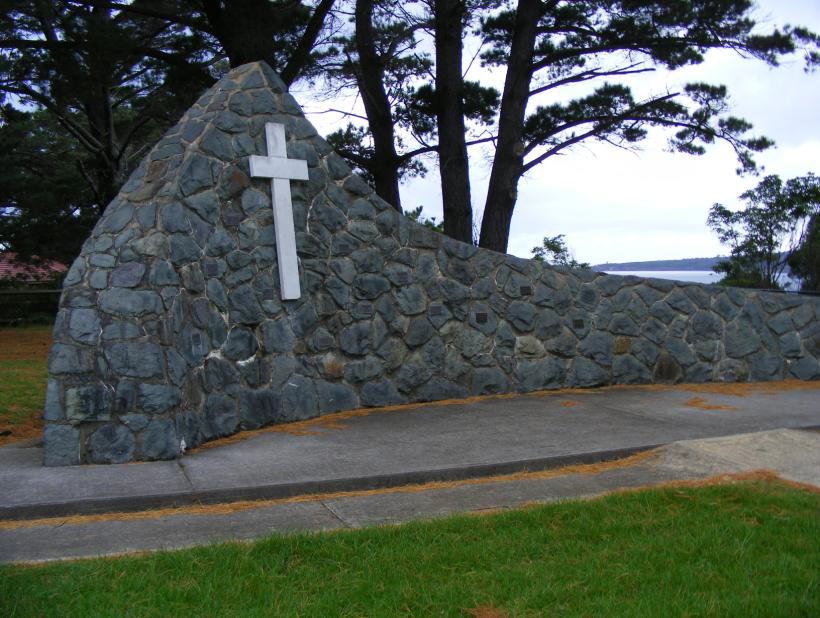
The Kilgour family - originated from the city of Dundee. Dundee is the county of Angus, Scotland, and is the fourth largest city. Slains Castle Ship: Captain: James Petrie Surgeon Superintendent: J Sheridan Sailed Deal 18th September 1840 - arrived Port Nicholson 25th January 1841 Alexander Kilgour was a Cooper by trade (Barrel Maker) and it is thought that this profession may have led to the family's constant moving in Australia. The first evidence of the family¡¦s movements comes from the New Zealand Shipping List. Alexander (45 yrs trade Cooper) and wife Margaret (35 yrs) plus the following children Alexander (Junior, aged 17 yrs also a Cooper) James (15 yrs, labourer), Ann (12 yrs), David (10 yrs), Margaret (2 yrs) and William 9mths. The Slains Castle departed Scotland on the 18th September 1840 and arrived at Wellington New Zealand on the 25th January 1841. Unfortunately their youngest child, William Kilgour aged 9mths is listed as having died at sea. The Kilgour's didn't stay long at Wellington, whether they were waiting for a connecting ship to Tasmania Australia, or Wellington didn't appeal to them is not sure. The next ship they boarded was at Port Nicholson (the name of the bay near Wellington). The barque Lord Sidmouth left Port Nicholson on the 4th February 1841 with 57 emigrant passengers, arriving Hobart 19th February 1841. They didn't stay long in Tasmania, as Helen (Ellen) MaConochie Kilgour is believed to have been born circa 1842, in Moruya New South Wales. (No official birth found for her, as yet.). It's not known when the Kilgour's arrived in N.S.W, as no entry details for them, have been located as yet (May have came on a Whaling vessel). By 1843 the Kilgour's were on the move again. This time they caught the ship "Sir John Byng". The Sir John Byng sailed from Sydney N.S.W on the 20th June 1843. The Kilgour's were cabin passengers this time, onboard were Alexander and Margaret, and their children are listed as: David, Ann, Margaret and Ellen. James Kilgour is not mentioned, which leaves a mystery to be solved as what has happened to him? He may have died in Tasmania or N.S.W? The ship arrived at Hobart Town, Tasmania, on the 4th July 1843. The family's state of health is recorded as being good. During their time in Tasmania the following children were born at Hobart Town: Another Alexander, and a Robert. This raises the question, as what has happened to Alexander born 1825? Did he died in Tasmania or in N.S.W?, as yet I have not been able to locate a death for him. The two children born in Tasmania didn't live long, Alexander died in 1844 aged 7 months and Robert died at the age of 1 month. The next death of a family member comes from Oakbank Williamstown, Victoria, with the death of Ann Kilgour, in 1853. She died of Tuberculosis, she was 24 years old. It is not sure if other family members were living there as well, or were still living in Hobart Town. But, on her death certificate, her father Alexander is a witness to her death, which leads me to conclude that the rest of the Kilgour family may have been living there, as David was a witness to Eliza Jane Brown's marriage to John Jones in Williamstown. The next mention is of David Kilgour signing a petition in Eden in 1857, to keep the local magistrate from leaving. By 1862 the rest of the Kilgour family were living at Eden N.S.W. Margaret Kilgour (Junior) had married an Andrew Brown in 1860; the witness' to her wedding were her brother David and her sister Ellen. 1862 was also the year when the father, Alexander died of Chronic Bronchitis, he had been sick for months and being winter it would have been extremely cold in Eden, this no doubt would not have helped him. Alexander Kilgour died on the 30th June 1862, at Eden N.S.W Australia, and was buried in the Eden Cemetery on the 2nd July 1862. On Alexander's death certificate only four children are mentioned, it's believed that 14 children were born to Alexander and his two wives. The remaining children were David, Margaret, Ellen and George. On the 11th or 12th of December 1866, another tragedy was to strike the Kilgour family, with the deaths of George and David. According to family legend the Kilgour boys worked in the Whaling industry in Eden. The story goes that the boys were out to sea at the time and were on board a whaling vessel when the weather turned, (see the Memoriam written for their deaths Christmas Day.) The boys were lost at sea, and presumed drowned. The incident is believed to have taken place just off the Eden coast, or near Montague Island, which is about 100 kilometres from Eden. From the Memoriam it would appear their deaths would have occurred on Christmas Eve. Margaret Kilgour (Mother) was said to have been deeply affected by her boy's deaths and would still cook their evening meals and place them in the oven to be kept warm. The old Kilgour house at Eden This leads me to believe that their bodies may have never been found, I have found no record to their deaths in the N.S.W Death Indexes as yet? A plaque is believed to have been in existence at Eden, commemorating the Kilgour's boy's deaths. The plaque is believed to have been taken down some years ago, as road works were being conducted in the area, but in the process, the plaque was lost. A recently found newspaper article now confirms this family legend, with the name of the vessel being 'Ellen'. The article also mentions that Margaret had lost two other sons in the same area which is most likely James and John Kilgour who are both deceased by 1862. In 1869, Margaret (Mother) died of Breast Cancer; on her death certificate only two children are left surviving. She died on the 4th January 1869, at Eden, N.S.W, Australia, and was buried in the Eden Cemetery on the 5th January 1869. The remaining children were Margaret Brown (nee Kilgour) and her sister Ellen. No doubt the Kilgour family had their share of misfortune, but times were tough back then for any pioneering family, it's not sure whether any of the boys married or had offspring to carry on the name of Kilgour, but the name of Kilgour is carried on in the grandchildren of Margaret and Ellen. Another family legend has Alexander Kilgour's father George Kilgour, as being a "Lord" who owned a ship by the name of "Lady Kilgour", a check of the Scottish shipping records has found no such ship in existence? Alexander Kilgour was involved in the Freemason's in Scotland (see article on this) and was a master mason; this no doubt would have helped in his social standing at the time. I hope to learn more about the Kilgour's in the near future and to update their story. The information on the Kilgour's comes from many different sources, but Mrs Heather Waddington has contributed most of it. Alexander Kilgour was the first child of Alexander & Margaret Kilgour; he was born on the 21st October 1825 at Dundee, Scotland. He died between 1841 - 43 (Australia). James Kilgour was the 2nd child of Alexander & Margaret Kilgour, he was baptised on the 1st December 1827 at Dundee, Scotland. He died between 1841 - 62 (Australia). Researcher Jim Gray believes that James didn't die before 1862 but joined the crew of the confederate warship CSS Shenandoah. The newspaper article dated 1867 which lists James brothers in the same boat as Minor former officer from the above ship (John F. Minor) in 1866, hints strongly towards association between Minor and James, which may explain why George and David Kilgour are associated with Minor by 1866. Problems with the birth date of James Kilgour in Jim Gray's account is 1843 to 1827, 16 yrs difference. James is not mention on his father's death certificate by name, but 6 males & 2 females are recorded as deceased by 1862 - (males - John, Alexander I, James ?, William, Robert, Alexander II), the informant was Margaret Kilgour (nee Taylor). Margaret may have made a mistake in not naming James as being alive, mistakes do occur especially if the person giving the information is upset or is illiterate, she may have been in a distress state when giving the details to the clerk who recorded the death of husband. With the death of George and David, the newspaper article mentions that two previous sons of Margaret Kilgour had drowned near Eden, this can only be John and James Kilgour. Reseacher Jim Gray has the following information on James Kilgour James Kilgour was born around 1843 in Scotland and migrated to Victoria, Australia. Upon his arrival in Melbourne, Victoria Kilgour disembarked from his ship and established a residence in the Melbourne area, where he was living and working when he was informed that the Confederate Cruiser, the "CSS Shenandoah" had entered Port Phillip Bay, off Melbourne, on January 25, 1865, to take on new supplies; and that its Captain was looking to acquire new crewmembers. Kilgour, at age 22, immediately went to the docks, made his way to the "Shenandoah" and upon an invitation from the crew went aboard, on the night of February 17, 1865. Having already heard, and being told by the crew, that if he was found aboard by local police he would be forcibly removed because Victorian authorities had issued orders that no one was to be allowed to go aboard the Confederate Cruiser, Kilgour was hidden out of sight until the ship made its way out of Australian waters. When that occurred Kilgour came out of hiding, on February 18, 1865, and by placing his mark beside his name on the ships log for a pay rate of $29.10, he became a seaman and a member of the "Shenandoah" crew. William A. Temple of the "Shenandoah" incorrectly recorded James's name as 'John"; which was carried over in the papers of the ORN. James Kilgour was also one of the signatories who expressed confidence in the command of Lieutenant James I. Waddell in a petition dated September 1865. Kilgour continued serving on the "Shenandoah" until November 6, 1865 at which time the "CSS Shenandoah" was officially surrendered by her Commander to British Captain Paynter, commanding her Majesty's ship "Donegal, in Liverpool, England. Afterwards, he joined the crew ashore. James Kilgour returned to Australia at the end of December, 1865 Alabama Claims, "Correspondence Concerning Claims Against Great Britain transmitted to the Senate of the United States in answer to the Resolutions of December 4, and 10, 1867, and of May 27, 1868", Washington; 1869 Amanda Peckham, Williamstown Library Eleanor S. Brockenbrough Library, Museum of the Confederacy, Richmond, Virginia Official Records of the Union and Confederate Navies in the War of the Rebellion 1, 3, 783. William A. Temple, affidavit History of The Confederate States Navy, J.T. Scarf, 1996 Marauders of the Sea, Confederate Merchant Raiders During the American Civil War, Mackenzie J Gregory The Cruise of the Shenandoah, Captain William C. Whittle, CSN Ann Kilgour was the 3rd child of Alexander & Margaret Kilgour, he was baptised on the 18th December 1829 at Dundee, Scotland. She died on the 29th August 1853 at Oakbank, Williamstown. David Taylor Kilgour was the 4th child of Alexander & Margaret Kilgour, he was baptised on the 14th December 1831 at Dundee, Scotland. No known marriage. He died on the 11th or 12th December 1866 of the coast of Eden? Whilst heading for Montague Island N.S.W. presumed to have drowned. Margaret Kilgour was the 5th child of Alexander & Margaret Kilgour, she was baptised on the 29th November 1838 at Dundee, Scotland. She married a Andrew Browne on the 2nd July 1860 at Eden N.S.W. She died on the 30th December 1902 at Eden, N.S.W. Their known children are: Alexander Kilgour, Margaret, Andrew Kilgour, (3 Male Triplets), Ellen M., George Kilgour, Annie K, James, Henry Arthur, Ethel Eugenie Evelyn. (For more information see family history of Andrew & Margaret Brown) William Kilgour was the 6th child of Alexander & Margaret Kilgour, he was baptised on the 26th December 1839. He died circa 1841 at sea onboard the Slains Castle. Helen (Ellen) MaConochie Kilgour was the 7th child of Alexander & Margaret Kilgour, she was baptised on the 29th May 1842 at Moruya, N.S.W. She first married a Charles Taylor on the 14th October 1870 at Pambula. She died on the 18th January 1922 at Jiggi Jiggi, N.S.W. Their are no, known children to Helen Kilgour and Charles Taylor. Her 2nd marriage was to a Alexander Law on the 29th May 1876 at Bega N.S.W. Their known children are: Alexander Law, Florence L. Law, William J. Law, Mable Ellen Law, Montague Llewellyn Law, Jessie Eugenie Law. Alexander Kilgour was the 8th child of Alexander & Margaret Kilgour, he was born on the 3rd April 1844 at Hobart, Tasmania. He died on the 21st October 1844 at Hobart, Tasmania. Robert Kilgour was the 9th child of Alexander & Margaret Kilgour, he was born on the 3rd January 1846 at Hobart, Tasmania. He died on the 3rd February 1846 at Hobart, Tasmania. George Kilgour was the 10th child of Alexander & Margaret Kilgour, he was born on the 5th August 1848? He died on the 11th or 12th December 1866 of the coast of Eden? Whilst heading for Montague Island N.S.W. presumed to have drowned. Other children to Alexander Kilgour - On Margaret Kilgour (nee Taylor) death certificate, Eight Males and Four Females Deceased. With two females living (1869), Two of the children could be from Margaret's Husband's first marriage (Jessie and John), the other Two I have found no trace as of as yet. Alexander Kilgour was first married to a Margaret Butters. They were married on the 23rd December 1811, at Dundee Scotland. Margaret Butters was baptised on the 6th July 1791, at Dundee. She was the daughter of Alexander Butters and Grizel Brown. Margaret died on the 1st September 1819, and was buried at the Howff Old Cemetery, Scotland. Their known children are: Jessie & John Kilgour Jessie Kilgour was the 1st child of Alexander & Margaret (nee Butters) Kilgour, she was born on the 20th December 1813. She married a Creighton Fairweather on the 22nd January 1835 at Dundee Scotland. She died c1847 Creighton Fairweather was born on the 27th January 1808 and died c1847? He was the son of Charles Fairweather & Janet Ferguson. The known Fairweather children are: John Stevenson, Eliza (b c1846), Jessie Emily & James Allen. Creighton Fairweather and other men, are believed to have suffocated in a Ships Hold, off the coast of N.S.W (Possibly Jarvis Bay) the name of the ship is not known. And Jessie also suffered on the same ship, it seems she drowned while being taken ashore. It is believed to have happened sometime after 1845, a Captain John Stevenson of Eden N.S.W reared the Fairweather children. Whose third wife was said to be Amelia Fairweather (sister of Creighton). Eliza Fairweather died under Stevenson in 1926 aged 86 years at Bairnsdale Victoria. Jessie Emily Fairweather was accidentally shot, date unknown, and her brother James Allen Fairweather was also killed, but by a falling tree, circa 1900. Jessie Kilgour and Creighton Fairweather Creighton was a whaler in Dundee, Scotland. By 1834 he became First Mate on the whaling ship "Horn", sailing under the command of Captain John Stevenson. After Crichton married Jessie Kilgour in 1835, the Fairweather¡¦s and Captain Stevenson decided to seek their fortune in Australia. Perhaps it was on hearing stories of the whales being so easily taken in the bays of Tasmania and New South Wales. It is thought that Crichton went first, working his way to New South Wales in a ship by December 1835, which is when Captain Stevenson set out with Margaret Small, Agnes Fairweather, and Jessie Kilgour; to Liverpool to board a cargo ship called The Kilmours and sail to Hobart Town. Captain Stevenson's 10 year old daughter, Amelia, was left in Dundee with Margaret's mother, Margaret Scott, to continue her education. Crichton's wife, Jessie, was the youngest of the group at 23 years of age. 26 year old Margaret Small had just married Captain Stevenson on 18 December 1835. It isn't known when the Captain started his relationship with Agnes, who was 10 years older and unlike Margaret, had not had any formal education - but it's thought Agnes may have been expecting the Captain's child before they set out from Dundee, which means maybe the Captain got her pregnant before he married Margaret!. They all reached Hobart Town on 19 May 1836, and soon after Agnes gave birth to William Stevenson. Captain Stevenson befriended the Imlay brothers - three gentlemen who had come to Two Fold Bay a few years earlier, having been fascinated with stories of how killer whales helped aborigines and early whalers capture and kill the Great Right Whales which came into the bay to calve. The Imlays welcomed Captain Stevenson's expert whaling knowledge. At that time whaling boat crews were almost entirely aboriginals as they were the most skilled local whalers, and understood whale movements in the bay. The business of bay whaling would fill Captain Stevenson's time while the season lasted. Crichton Fairweather remained a mariner all his years in NSW, and sometimes sailed the Imlays ship the Merope. On 6 March 1837 Crichton and Jessie had their first son, John Stevenson Fairweather. On 12 August 1837 George Imlay Stevenson was born to Captain Stevenson and his wife Margaret, followed by a daughter a year later on 20 November 1838 - 6 days after which Margaret died. The baby was named Margaret Small Stevenson. The mother was buried facing the Northern bay where her gravestone remains, still easy to read today. Agnes Fairweather took responsibility for Margaret's two children, George Imlay and Margaret Small Stevenson, along with her own son William. Within a year Agnes was being called Mrs Stevenson. A year later and Agnes had a son, Robert, and Jessie had her second child, Eliza. When Margaret died, Captain Stevenson wrote to her mother, Margaret Scott, in Dundee to inform her of her daughter's death, and to invite her to join them in Two Fold Bay, and bring his daughter Amelia with her. However, Margaret Scott had to stay in Dundee to look after her son, who had been locked up in an asylum after losing his mind. 15 year old Amelia sailed from Grenock, near Glasgow, on the ship Harvest Home on 12 Oct 1839, and reached Sydney on 3 May 1840. By late 1841 Captain Stevenson and his family left Snug Cove for Broulee, a small village two hundred kilometres north of Two Fold Bay. Broulee was expected to become an important town but it offered little protection to shipping and on 9 and 10 October 1841, Stevenson played a vital part in the rescue of some crew of a Schooner, the Rover, that was wrecked on the bay. The report Captain Stevenson wrote to the shipping company in Sydney was published in the Sydney Morning Herald on Monday 25th October 1841. In 1841 Agnes gave birth to John Walter Stevenson, probably in Broulee. Later that year Captain Stevenson, Agnes, Amelia, Jessie, and the 7 children, moved to Mallacoota Inlet. Two bark huts were built on a small point towards the southern headland of the inlet, a position of great beauty. The scene would have included Aboriginal people standing in their bark canoes with spears ready, peering into the water waiting for fish. Theirs seem to have been one of the idyllic early encounters between the Aborigines and the white settlers. The single white group offered no threat to the way of life of the Aborigines. The Aborigines would have known of the good treatment the Aborigines had received from Stevenson and the Imlays at Two Fold Bay. Life at Mallacoota was not easy for Agnes, her son Robert died in 1843 and was buried there in the area still called Captain Stevenson's point. In late 1843 the Stevensons realised that their farming venture at Mallacoota would not succeed, and so moved 50 kilometres up the Genoa River to Wangrabelle, to a tiny parcel of good land surrounded by wilderness. This was to be home to Agnes for the next 12 years. In 1844 Agnes gave birth to Creighton Fairweather Stevenson, and in1845 Jessie gave birth to her second son, James Allan Fairweather. Amelia was 20 when she married James Allan in 1845 at Wangrabelle, and they started their own large family. Captain Stevenson gave James and Amelia the adjacent property called Merramingo 5 years later. By 1854 James and Amelia had moved to East Boyd on Two Fold Bay where James was listed as being a "Ship Wright". In the same year, Agnes and Captain Stevenson had another son, Gordon. Three tragedies struck this little group of pioneers from Dundee during these years. While disembarking from a ship, Jessie Fairweather slipped and was crushed or drowned. Crichton was suffocated by fumes along with other sailors, in the hold of a ship near Jervis Bay. Their tiny daughter, Jessie, was accidentally shot when James Allan went to kill a beast for provisions. Her grave is in the little cemetery at Wangrabelle. So Agnes found herself with quite an extended family to raise consisting of her own children; William, John, Creighton and Gordon; Margaret's children George Imlay and Margaret Small Stevenson; her niece Eliza, and two nephews John and James Fairweather. John Stevenson made full purchase of the run at Wangrabelle in 1850, and he then bought the licence to the Bondi Station Run at auction aged over 75 and moved there with Agnes. Their son William remained at Wangrabelle to manage the property. Agnes's youngest son, Gordon, was the first Stevenson to die at Bondi. They laid him to rest on a high ridge overlooking the homestead and the beautiful rugged hills and valleys of the run. In Oct 1859 George Imlay Stevenson married his sister-like "cousin", Eliza Fairweather, in Bondi. Captain Stevenson bought the lease to Wog Wog at Towamba at this time and that became the home to George and Eliza for the next 20 years. A year later William Stevenson married Isabella Weatherhead in Bondi. She was a daughter of their old friend and neighbour, Alexander Weatherhead, of Nungatta. This couple returned to Wangrabelle, where Isabella remained until her death in 1931. Though the property passed into other hands, Stevenson's grandson William Allan married Isabella Weatherhead's youngest sister, Elizabeth, and they would live in Merramingo for many years. By 1863 the lease to the Bondi run must have been expiring, so on 23 Apr Captain Stevenson selected a 4,000 acre portion of the run and kept the homestead site and the name "Bondi". The next marriage at Bondi came in 1865 and may have been conducted in secret. The 67 year old bride, Agnes Fairweather, married her 85 year old partner, Captain Stevenson. In 1869 James Allan Fairweather married Elizabeth Roberts at Towamba and lived round the area for many years before returning to Wangrabelle where he was killed by a falling tree in 1917 as he tried to collect wild honey. By coincidence, Margaret Small Stevenson married an unrelated James Fairweather at Bondi in 1871. This James died at Gunning in 1896 but just what happened to Margaret is not clear. In 1867 John Stevenson junior brought Laura Benjamin, a fiery young 19 year old lady into the Bondi household. Laura was one of the younger children in a family of five girls and a boy, who came from Port Macquarie. Laura argued often and fiercely with Captain Stevenson. His mind remained sound, but as his body deteriorated with age, he became more dependent on Laura, much to his anguish. Laura's three sons, Lindon, Mortimer and Walter were all born before Captain Stevenson died on 28 March 1874, at the age of 96. He was buried in the same spot as his son Gordon on the hillside, but was buried in a standing position so he could look over his lands. Four trees were planted by the corners of his grave, of which two survive. The year of death appears to be incorrectly engraved on his stone as 1871 instead of 1874, perhaps because of a repair to the stone in 1971. In 1874, after the Captain's death, Laura was again pregnant and she asked her husband to send for a Governess. A 19 year old girl named Mary Ann "Annie" Kearney filled the role, she came from Newcastle in Australia. Annie was a daughter of a coal miner, but she was very well educated, strong minded and attractive, with "town" ways. This all rubbed Laura up the wrong way, and she made Annie's life in Bondi a hell on earth. When Laura's brother-in-law, Creighton Stevenson, announced he was going to marry her, it was a further cause of Laura's wrath. Annie's children and grandchildren grew up with stories of how terrible Laura had been to Annie. Annie and Creighton married in Bondi in February 1876. Soon after, Laura and John moved out to the Mila property they had inherited from Captain Stevenson, and the bitterness between the two families was never resolved. In 1877 Annie and Creighton had the first of 7 children. They named her Agnes after his mum, but she became better known by the nickname "Tot". On 20 Nov 1878 Agnes (mother, not the grandchild) died of respiratory problems in Bondi at the age of 79. She was carried up the hill to rejoin her husband, Captain Stevenson. By 1883, financial problems caused the bank to foreclose on Creighton and Annie's mortgage loan, and along with their daughter Agnes, they became homeless. Annie Stevenson and the children moved to a cottage in Croydon, Sydney. For nearly 20 years after that, Creighton made only brief visits to his family between various kinds of work in the country. In 1884 their daughter Emily was born in Croydon, followed in 1886 by another daughter, Kathleen. Family: Jessie Kilgour b. 1812, d. 1847 *John Stevenson Fairweather b. 1837, d. 1917 * Emily Eliza Fairweather b. Feb 1839 *Jessie Fairweather b. 1842, d. 1842 *James Fairweather b. 1845, d. 1917 above Story and information from http://www.turnbullclan.com/tca_genealogy/tca_all2-o/p99.htm) John Kilgour was the 2nd child of Alexander & Margaret (nee Butters) Kilgour, he was born on the 20th December 1814, and was baptised. 06 December 1844. He married a Margaret Fairweather on the 6th December 1844. He died on the (unknown) Margaret Fairweather (details unknown) (Not yet confirmed if John is the correct John Kilgour) |